



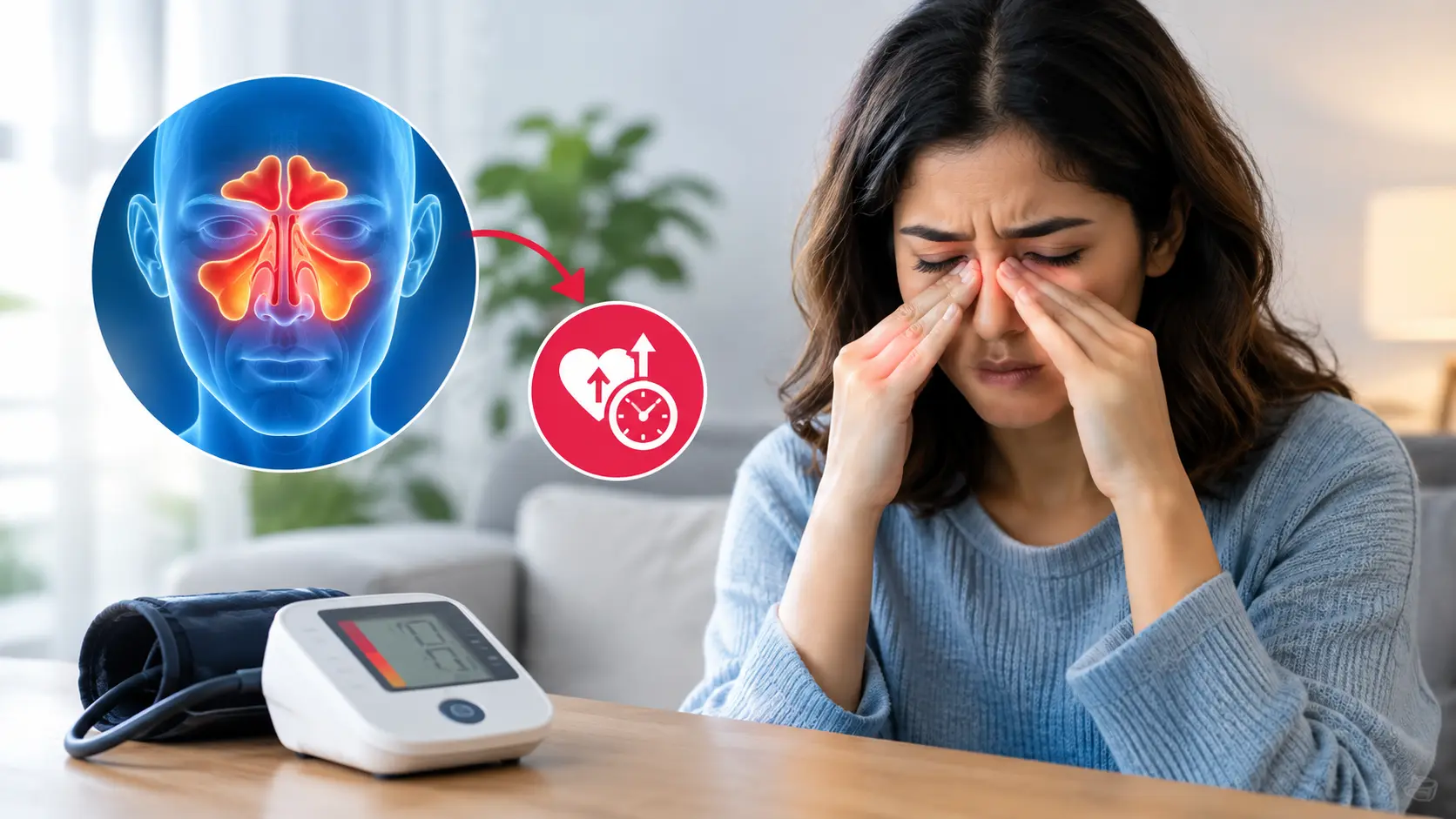
Yes, a sinus infection can temporarily raise your blood pressure. The rise usually comes from pain, stress, poor sleep, and certain decongestants — not the infection itself. For most people it’s short-lived, but if you have hypertension, manage it carefully.
That short answer covers the basics, but the details matter — especially which medicines are safe, how high the rise can go, and when a spike is a warning sign. If you’re worried about your readings during an infection, a quick online doctor consultation on MedEasy can tell you whether your symptoms need attention or simple home care.
Why a Sinus Infection Pushes Your Blood Pressure Up
When you’re fighting a sinus infection, your body is under real physical stress. Congestion, facial pressure, and throbbing headaches activate your nervous system, releasing stress hormones like adrenaline and cortisol. These hormones cause vasoconstriction — a narrowing of blood vessels — and speed up your heart rate, which can push blood pressure above your normal range.
There’s also an inflammation angle. Fighting any infection triggers systemic inflammation, and inflammation makes blood vessels stiffer and the heart work harder. For someone already managing hypertension, that added load can nudge readings higher than usual.
The reassuring part: for most people these changes are temporary and settle once the infection clears and sleep returns to normal. The question isn’t usually “will it damage my heart” — it’s “how do I relieve my sinuses without spiking my BP further?”
How Much Can a Sinus Infection Raise Your Blood Pressure?
There’s no single fixed number, because it depends on your baseline, your pain level, your sleep, and any medicines you take. Pain and stress alone can push readings roughly 10–20 points higher than your normal during an acute infection, and decongestants can add more on top of that.
What matters more than the exact number is the pattern. A brief rise that returns to baseline once your pain eases and you sleep well is expected. A reading that stays high for days after your sinus symptoms improve — or one that climbs sharply — deserves medical attention rather than watchful waiting.
The Real Culprit: Decongestants and Blood Pressure
Here’s the hidden factor most people miss. Many over-the-counter sinus and cold medicines contain pseudoephedrine or phenylephrine. These shrink swollen nasal tissue, but they also constrict blood vessels throughout your body — which can meaningfully raise blood pressure, especially if you have hypertension.
Two more medicine points worth knowing:
- Overusing nasal decongestant sprays (like oxymetazoline) for more than a few days can cause rebound congestion — your nose gets blocked again the moment you stop, pushing you to use more. This cycle keeps stress and poor sleep going, which indirectly affects BP.
- Nasal steroid sprays (such as fluticasone or mometasone) work locally in the nose and generally don’t raise blood pressure, which is why they’re often better suited for people with hypertension.
The safest move isn’t to hunt for a product “labelled safe for BP” — labels can be misleading. It’s to check the ingredient list and ask a doctor or pharmacist before starting any new sinus medicine. To understand how simple it is to get that guidance online, see our explainer on what telehealth is in India.
Sinus, Sleep, and Blood Pressure: The Overnight Link
Blocked sinuses don’t just bother you during the day. At night, congestion disrupts breathing and sleep quality, and poor sleep raises stress hormones that constrict vessels and lift morning blood pressure. In some people, heavy nasal blockage can worsen snoring or sleep-disordered breathing, which is independently linked to higher blood pressure.
Breaking the cycle — congestion → poor sleep → higher BP → more stress → worse congestion — is often the single most effective thing you can do. Clearing your nose before bed and sleeping with your head slightly elevated can make a real difference to overnight readings.
Safe Ways to Relieve Sinus Symptoms Without Spiking Your BP
You can ease congestion without reaching for BP-raising decongestants. These approaches are gentle on your cardiovascular system:
- Saline nasal irrigation — rinsing with a saline solution clears mucus and allergens without any effect on blood pressure.
- Steam inhalation — warm steam loosens congestion and soothes irritated passages.
- Stay well hydrated — fluids thin mucus so it drains more easily.
- Elevate your head while sleeping — reduces overnight congestion and pressure.
- Nasal steroid sprays — for ongoing congestion, these control inflammation without raising BP (use as directed).
- Monitor your readings — during an infection, checking your BP at home helps you spot a genuine problem early.
- Rest and manage stress — lowering the stress response directly helps both sinus recovery and blood pressure.
If congestion lasts beyond about 10 days, keeps returning, or your BP stays elevated after symptoms ease, that’s the point to speak with a doctor rather than keep self-treating.
When Sinus Infections Become a Longer-Term BP Concern
Recurring sinus infections don’t directly cause long-term hypertension. But frequent inflammation, repeated poor sleep, and regular use of the wrong medicines can make blood pressure harder to control over time. If you deal with chronic sinusitis alongside high BP, a longer-term plan — allergy testing, the right preventive sprays, and safe symptom relief — helps you avoid these indirect effects.
Before you assume every high reading is your heart, it’s worth confirming with a professional whether your sinus infection, a medicine, or something else is driving it. If you’re unsure whether an online visit is right for a concern like this, our guide on whether online medical consultation is legal in India explains how registered doctors provide safe, valid remote care.
Red Flags: When to Get Medical Help Immediately
Contact a doctor right away — or seek emergency care — if you notice any of these:
- Blood pressure above 180/120 (a hypertensive crisis)
- Chest pain or tightness
- Shortness of breath
- Blurred vision or confusion
- A severe headache that feels different from your usual sinus pain
These can point to a heart or brain issue that has nothing to do with your sinuses, and they need urgent attention rather than home remedies.
Talk to a doctor from home
Worried a sinus infection is affecting your blood pressure? You don’t have to guess. On MedEasy, you can consult a verified general physician or ENT specialist online for safe symptom relief, BP-conscious medication guidance, and advice on whether your readings need a closer look — with same-day appointments and prescriptions sent straight to your phone.
Resources & Further Reading
- American Heart Association — High Blood Pressure Overview
- Mayo Clinic — Sinus Infection (Acute Sinusitis)
Medical Disclaimer: This article is for general education and is not medical advice. Sinus and blood pressure concerns should be assessed by a qualified doctor, especially if you have hypertension or take regular medication. If you experience a hypertensive crisis, chest pain, or trouble breathing, seek emergency care immediately.