


Quick answer: Can masturbation cause hair loss? No. There is no scientific evidence that masturbation causes hair loss or baldness. Hair loss in men is mainly driven by genetics, along with stress, nutrient gaps, thyroid problems, and some medicines. The myth comes from old beliefs about semen and a misunderstanding of hormones like DHT.
If you’ve noticed more hair in the shower and your mind went straight to guilt, you’re not alone — this is one of the most searched hair myths. This guide explains where the idea came from, why the two main theories don’t hold up, what is actually causing your hair fall, and when it’s worth seeing a doctor.
Where Did the Masturbation–Hair Loss Myth Come From?
Linking hair loss to sexual habits isn’t an internet invention. For centuries, some traditions treated semen as a limited “life force,” warning that losing too much would drain strength, eyesight, and vitality. Hair loss got added to that list and was repeated until it felt like fact.
Today, the claim survives on forums, usually backed by two arguments: a hormone theory (DHT) and a protein theory. As Medical News Today puts it, “there is no scientific evidence to support this.” Here’s why each argument falls apart.
Does Masturbation Increase DHT and Cause Baldness?
The theory: ejaculation raises testosterone, testosterone turns into DHT (dihydrotestosterone), and DHT causes male pattern baldness.
Why it doesn’t hold up:
- The hormone link isn’t there. A 2001 study in the World Journal of Urology found that testosterone levels in healthy men actually rose after three weeks of not ejaculating — the opposite of what the myth predicts. Medical News Today notes there is “no evidence to suggest that masturbation increases DHT levels.”
- DHT levels aren’t the real driver anyway. Male pattern baldness (androgenetic alopecia) depends on how sensitive your hair follicles are to DHT — and that sensitivity is inherited. Two men with the same hormone levels can have very different amounts of hair because of their genes.
So even if masturbation did nudge hormones briefly, it wouldn’t change the genetic follicle sensitivity that actually causes pattern hair loss.
Does Losing Semen Cause Hair Fall?
The theory: semen contains protein, hair is made of protein (keratin), so frequent ejaculation “starves” your hair.
Why it doesn’t hold up — the numbers:
|
Measurement |
Amount |
|---|---|
|
Protein in semen |
About 5 g per 100 mL |
|
Semen per ejaculation |
About 3.3–3.7 mL |
|
Protein lost per ejaculation |
Less than 0.2 g |
|
Protein in one egg (for comparison) |
About 6 g |
Semen figures: Medical News Today.
That’s a tiny amount your body replaces easily through normal meals. There’s no way it could deprive your hair follicles of what they need.
What’s Really Causing Your Hair Fall?
1. Genetics (androgenetic alopecia)
This is the most common cause of hair loss in men. According to Healthline, premature hair loss is “primarily caused by genetics, not masturbation.” If thinning runs in your family, you’ve likely inherited follicles that are sensitive to normal hormone levels. Nothing you did caused it — and stopping masturbation won’t reverse it.
Common signs: a receding hairline at the temples, thinning at the crown, gradual change over months or years.
2. Stress (telogen effluvium)
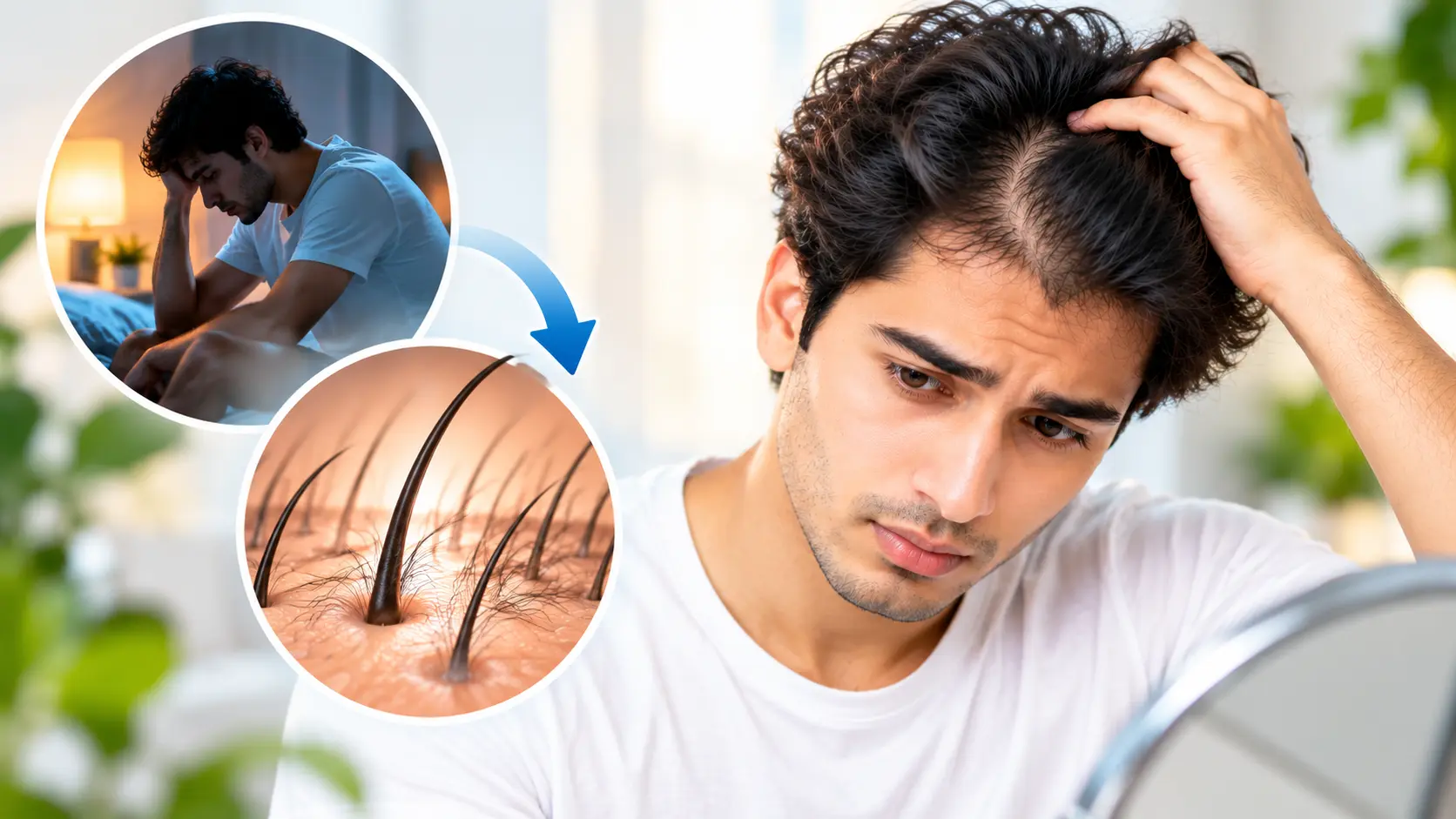
This is often the real explanation behind sudden hair fall that people blame on masturbation. Major stress can push many hair follicles into their resting phase at once. A few months later, those hairs shed together, causing a noticeable wave.
Here’s the irony: ongoing guilt, shame, and worry about the myth are themselves a form of stress. The anxiety about the supposed cause can become the actual cause.
Common signs: sudden, even shedding across the whole scalp, often 2–3 months after a stressful period.
3. Nutrition, thyroid, and other causes
The American Academy of Dermatology lists low levels of biotin, iron, protein, or zinc and thyroid disease among causes of hair loss — and notes that hair can regrow once the deficiency or thyroid problem is treated. Other triggers include recent illness, certain medicines, and tight hairstyles.
|
Cause |
What it looks like |
What helps |
|
Genetics |
Receding hairline, crown thinning, slow progression |
Doctor-guided treatment |
|
Stress |
Sudden all-over shedding, months after stress |
Managing stress; usually recovers on its own |
|
Nutrient deficiency |
Diffuse thinning, often with fatigue |
Blood test, then correct the deficiency |
|
Thyroid problems |
Thinning plus weight change, tiredness |
Thyroid testing and treatment |
|
Scalp conditions |
Shedding with itching, flaking, redness |
Treating the scalp condition |
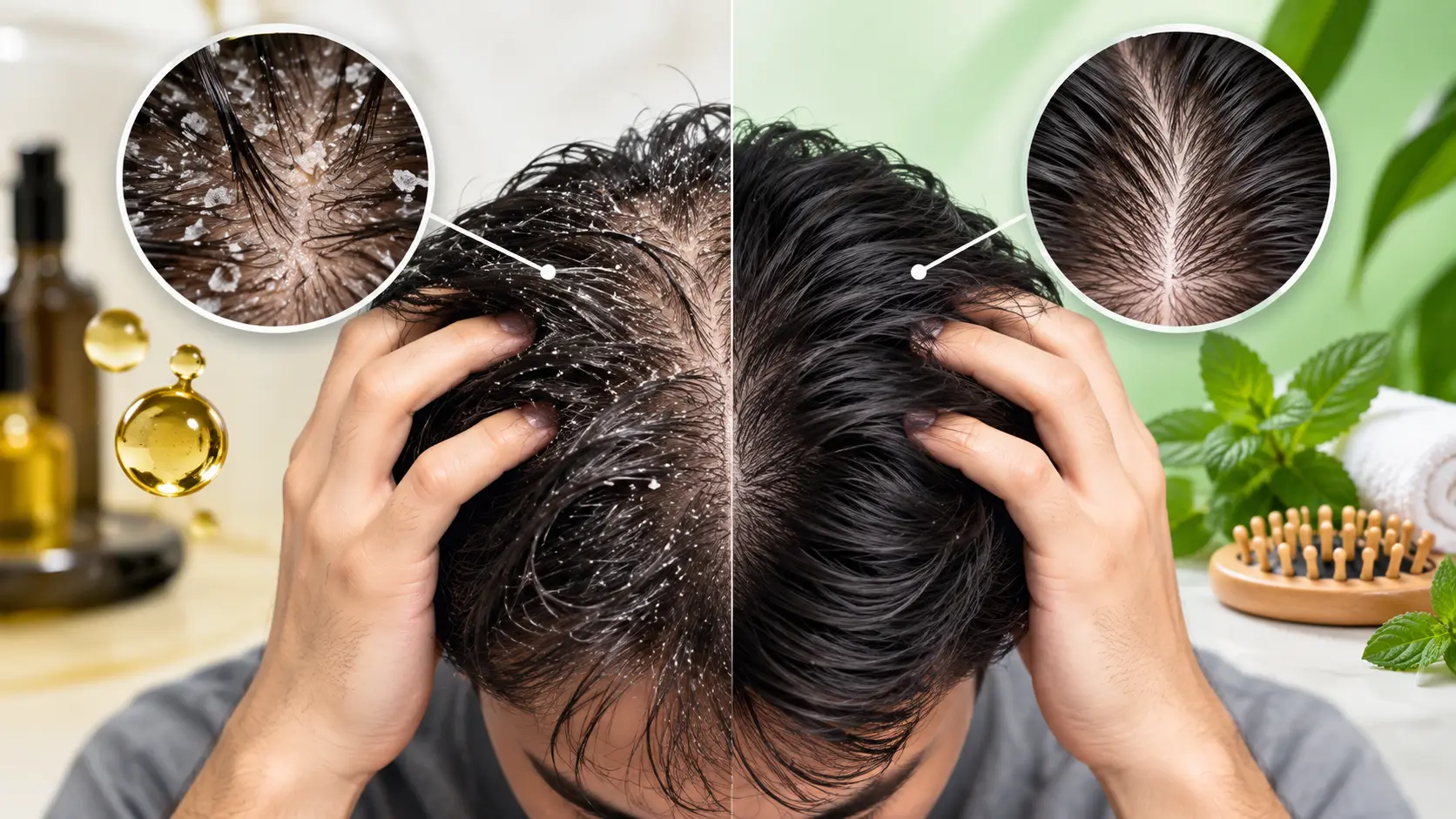
If your hair fall comes with dandruff or an oily scalp, see our guide on hair fall due to dandruff and oily scalp.
How Much Hair Fall Is Normal?
According to Healthline, most people shed 50 to 100 hairs a day as part of the normal hair growth cycle, while new hair grows in. Seeing hair on your pillow or in the shower is normal. A sudden increase, bald patches, or a changing hairline is not.
When Should You See a Doctor About Hair Loss?
Mild shedding after a stressful period usually settles within a few months. See a dermatologist or trichologist if you notice:
- Bald patches rather than even thinning
- A hairline or part that’s visibly shifting over several months
- Shedding that hasn’t slowed after three to four months
- Redness, itching, or flaking on the scalp
- Hair loss with fatigue, weight changes, or other new symptoms
A short consultation — sometimes with a simple blood test for thyroid or iron — is usually enough to tell whether you’re dealing with genetics, stress, a deficiency, or something else.
The Bottom Line
So, can masturbation cause hair loss? No. Neither the DHT theory nor the protein theory holds up, and there is no scientific evidence linking the two. If yo
Talk to a Doctor, Privately
Hair loss can be stressful, and myths make it worse. If you’re worried about thinning hair, a doctor can tell you what’s actually going on — whether it’s genetics, stress, a deficiency, or a scalp issue — and what to do next. Book a confidential online consultation on MedEasy and get a clear answer from home.
Resources & Further Reading
- Medical News Today: Does Masturbation Cause Hair Loss? Facts and Myths
- Healthline: Does Masturbation Cause Hair Loss?
- American Academy of Dermatology: Hair Loss — Who Gets It and Causes
- Exton et al. (2001), World Journal of Urology: Endocrine Response to Masturbation-Induced Orgasm After 3-Week Abstinence
- Androgenetic Alopecia: Pathogenesis and Potential for Therapy (Expert Reviews in Molecular Medicine)
Medical Disclaimer: This article is for general education only and is not medical advice. If you’re concerned about hair loss, consult a qualified doctor or dermatologist.