



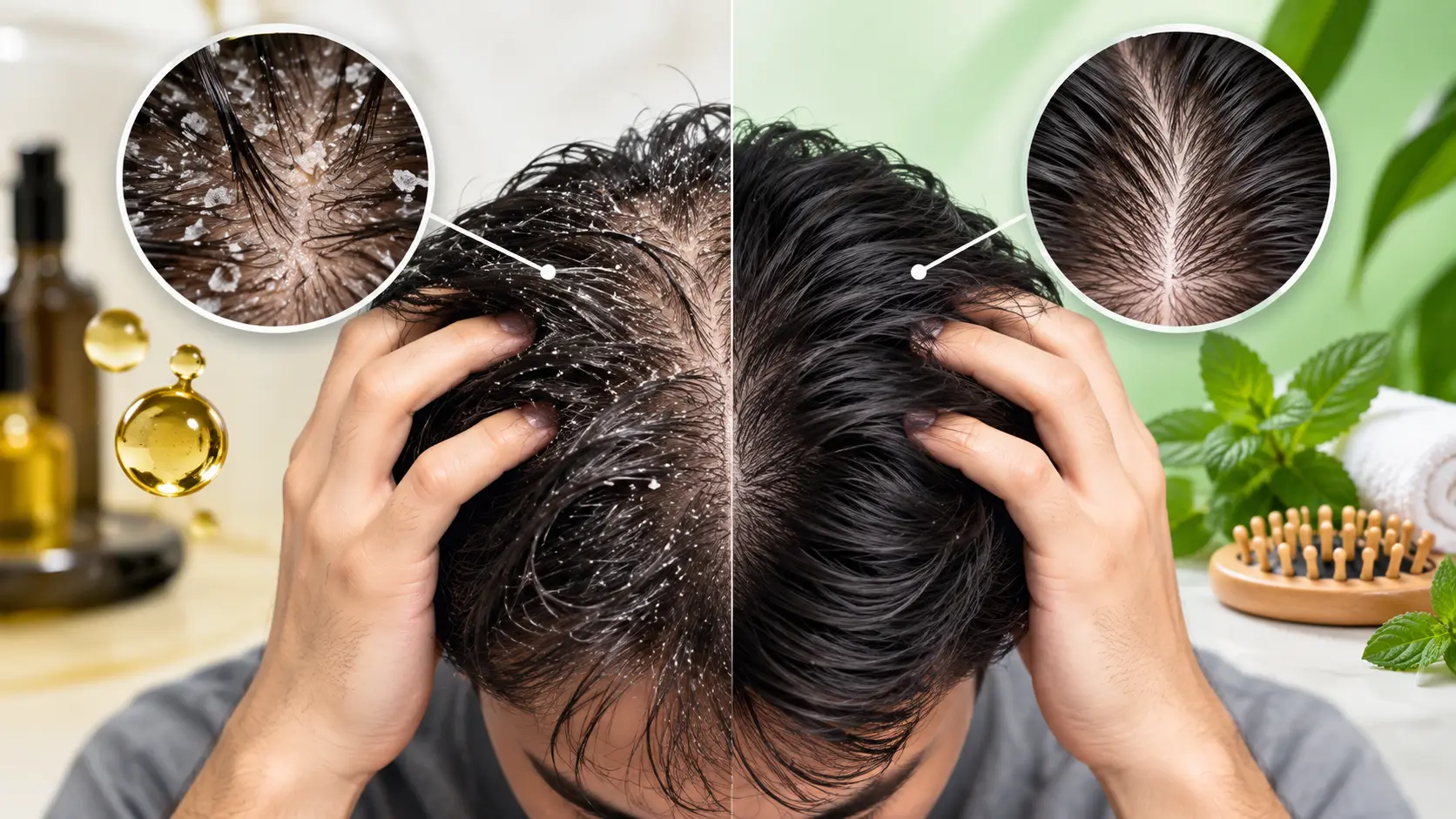
Yes, hair fall due to dandruff and oily scalp can be stopped fast with the right routine. Clear flakes, balance oil, and soothe itch using targeted shampoos, gentle washing, and simple home care to reduce shedding within weeks.
Important first: this shedding is almost always temporary, not permanent baldness. Excess oil feeds a yeast called Malassezia on your scalp, which triggers flaking, redness, and itching — and that inflammation pushes hair into its shedding phase early. Fix the scalp environment, and the fall slows down.
Why Your Scalp Is Shedding More Than Usual
Losing 50–100 hairs a day is normal, but when you notice clumps in the shower, on your pillow, or clogging your comb, it’s time to pay attention. For many people, the root cause isn’t genetics or stress — it’s an unhealthy scalp environment driven by excess oil and stubborn dandruff.
When sebum (natural scalp oil) builds up, it creates a breeding ground for Malassezia, a yeast-like fungus that triggers flaking, redness, and itching. This inflammation weakens hair roots, shortens the growth phase, and accelerates shedding. That’s why hair fall due to dandruff and oily scalp often goes hand in hand — fix the scalp, and the fall slows down.
Does an Oily Scalp Actually Cause Hair Loss?
Not directly — but it sets off the chain reaction that does. An oily scalp doesn’t just look greasy, it suffocates hair follicles. Excess sebum mixes with dead skin, sweat, and product residue, forming a thick layer that blocks pores. This prevents nutrients and oxygen from reaching the root, leading to weaker strands that break or fall out easily.
Dandruff adds another layer of trouble. The constant itching damages the scalp barrier, causing micro-tears and inflammation. Over time, this chronic irritation can push hair follicles into a resting phase prematurely, resulting in noticeable thinning. Breaking this cycle requires a dual approach: control oil production and eliminate flakes simultaneously.
7 Proven Fixes to Stop Shedding Fast
If hair fall due to dandruff and oily scalp is your exact problem, these seven steps target both root causes at once — the oil and the fungus — rather than treating flakes alone.
1. Switch to a Medicated Shampoo with Ketoconazole or Zinc Pyrithione
Not all shampoos are created equal. For oily scalp hair loss treatment at home, choose a medicated formula containing ketoconazole (1–2%), zinc pyrithione, or selenium sulfide. These ingredients target the fungus behind dandruff while reducing inflammation and oil buildup.
Use it 2–3 times a week, massaging gently into the scalp for 3–5 minutes before rinsing. Leave it on for an extra minute to let the active ingredients work. Rotate with a mild, sulfate-free shampoo on other days to avoid over-drying.
2. Wash Your Hair More Frequently (But Gently)
Contrary to old advice, washing oily hair daily won’t cause more fall — it actually helps. Skipping washes lets oil and flakes accumulate, worsening inflammation and shedding. Aim to wash every other day, or daily if your scalp gets greasy quickly.
Use lukewarm water, not hot, to avoid stripping natural oils. Apply shampoo only to the scalp, not the lengths, and follow with a lightweight conditioner on the ends. This keeps roots clean without drying out the rest of your hair.
3. Avoid Heavy Oils and Serums on the Scalp
Coconut oil, castor oil, and thick serums might feel nourishing, but they can clog pores and feed dandruff-causing fungus, since Malassezia feeds directly on saturated fatty acids. If you love oiling, limit it to the hair shafts only, never the scalp. Or switch to lighter options like jojoba or argan oil, applied sparingly once a week.
4. Exfoliate Your Scalp Once a Week
Just like your face, your scalp benefits from gentle exfoliation. Use a scalp scrub or a DIY mix of brown sugar and yogurt to slough off dead skin and product buildup. This unclogs follicles, improves circulation, and helps medicated shampoos penetrate better.
Be gentle — no harsh scrubbing. Massage in circular motions for 2–3 minutes, then rinse thoroughly. Follow with your regular shampoo and conditioner.
5. Choose the Best Shampoo for Oily Scalp and Hair Fall
The best shampoo for oily scalp and hair fall balances cleansing power with scalp care. Look for labels that say “anti-dandruff,” “oil control,” or “scalp detox,” and avoid sulfates, silicones, and heavy fragrances that can irritate an already sensitive scalp.
|
Ingredient |
What it does |
Best for |
|
Ketoconazole (1–2%) |
Strong antifungal, clinical gold standard |
Active flaking and itching |
|
Zinc pyrithione |
Antifungal + antibacterial, gentler |
Mild-to-moderate, ongoing use |
|
Selenium sulfide |
Antifungal, slows cell turnover |
Oily, stubborn dandruff |
|
Salicylic acid |
Lifts scale and buildup |
Thick or crusty flakes |
|
Piroctone olamine |
Regulates sebum, calms inflammation |
Oily, dandruff-prone scalps |
|
Niacinamide |
Regulates oil production |
General oil control |
|
Caffeine |
Stimulates follicles |
Reducing shedding |
|
Tea tree oil / aloe vera |
Soothes itch, mild antifungal |
Sensitive scalps, as an add-on |
6. Manage Stress and Diet for Long-Term Health
Stress spikes cortisol, which increases oil production and triggers inflammation. Pair your topical routine with stress-reduction techniques like yoga, meditation, or even a 10-minute daily walk. Also, ensure your diet includes enough protein, iron, zinc, and omega-3s — all critical for hair strength and scalp health.
Managing stress matters for more than your scalp — ongoing stress is linked to other health effects too, including temporary spikes in blood pressure, which is one more reason a calmer routine benefits your whole body, not just your hair.
Hydration matters too. Dehydration makes oil thicker and harder to wash away, so drink at least 2–3 liters of water daily.
7. See a Dermatologist If Shedding Persists
If you’ve tried these steps for 4–6 weeks and still see excessive fall, it’s time to consult a specialist. Persistent dandruff hair fall may indicate underlying issues like hormonal imbalances, thyroid problems, or severe fungal infections that require prescription treatment.
A dermatologist can perform a scalp analysis, recommend stronger medicated shampoos, or suggest oral antifungals if needed. Early intervention prevents long-term damage and speeds up recovery. You can book a dermatologist consultation on MedEasy and get a scalp assessment without waiting for an in-person appointment.
How to Stop Hair Fall from Oily Scalp: A Simple Weekly Routine
Knowing how to stop hair fall from oily scalp comes down to consistency. Here’s a sample weekly plan:
- Monday, Wednesday, Friday: Medicated shampoo (ketoconazole or zinc pyrithione)
- Tuesday, Thursday, Saturday: Mild, sulfate-free shampoo
- Sunday: Scalp exfoliation + deep conditioning (ends only)
- Daily: Avoid touching scalp, manage stress, stay hydrated
Stick to this for at least 4 weeks. You should notice less itching and fewer flakes first, with reduced shedding following by around week 3–4. Full regrowth results typically take 8–12 weeks as stronger new hairs come in — don’t judge the routine too early.
When to Worry: Signs You Need Professional Help
Not all hair fall is scalp-related. See a doctor if you experience:
- Sudden, patchy bald spots
- Red, painful, or oozing scalp
- Hair coming out in clumps during brushing
- No improvement after 6 weeks of consistent care
These could signal conditions like alopecia areata, severe seborrheic dermatitis, or nutritional deficiencies that need medical attention — not something to keep self-treating.
Talk to a Specialist Online
If your hair fall, flaking, or oily scalp hasn’t improved with home care, don’t keep guessing. On MedEasy, you can consult a verified dermatologist or trichologist online, get a scalp assessment, and receive a treatment plan without visiting a clinic. Online consultations for concerns like this are a legitimate, legally recognized way to see a doctor in India, so there’s no need to delay care while waiting for an in-person slot.
Book a dermatology consultation on MedEasy to get a personalized scalp routine and, if needed, a prescribed shampoo delivered to your door.
Resources & Further Reading
- American Academy of Dermatology — How to Treat Dandruff
- Mayo Clinic — Dandruff Diagnosis and Treatment
- NHS — Dandruff
Medical Disclaimer: This article is for general education only and is not medical advice. Hair fall can have multiple causes beyond dandruff or an oily scalp. If shedding is sudden, severe, or doesn’t improve with consistent care, consult a qualified dermatologist for proper diagnosis and treatment.