
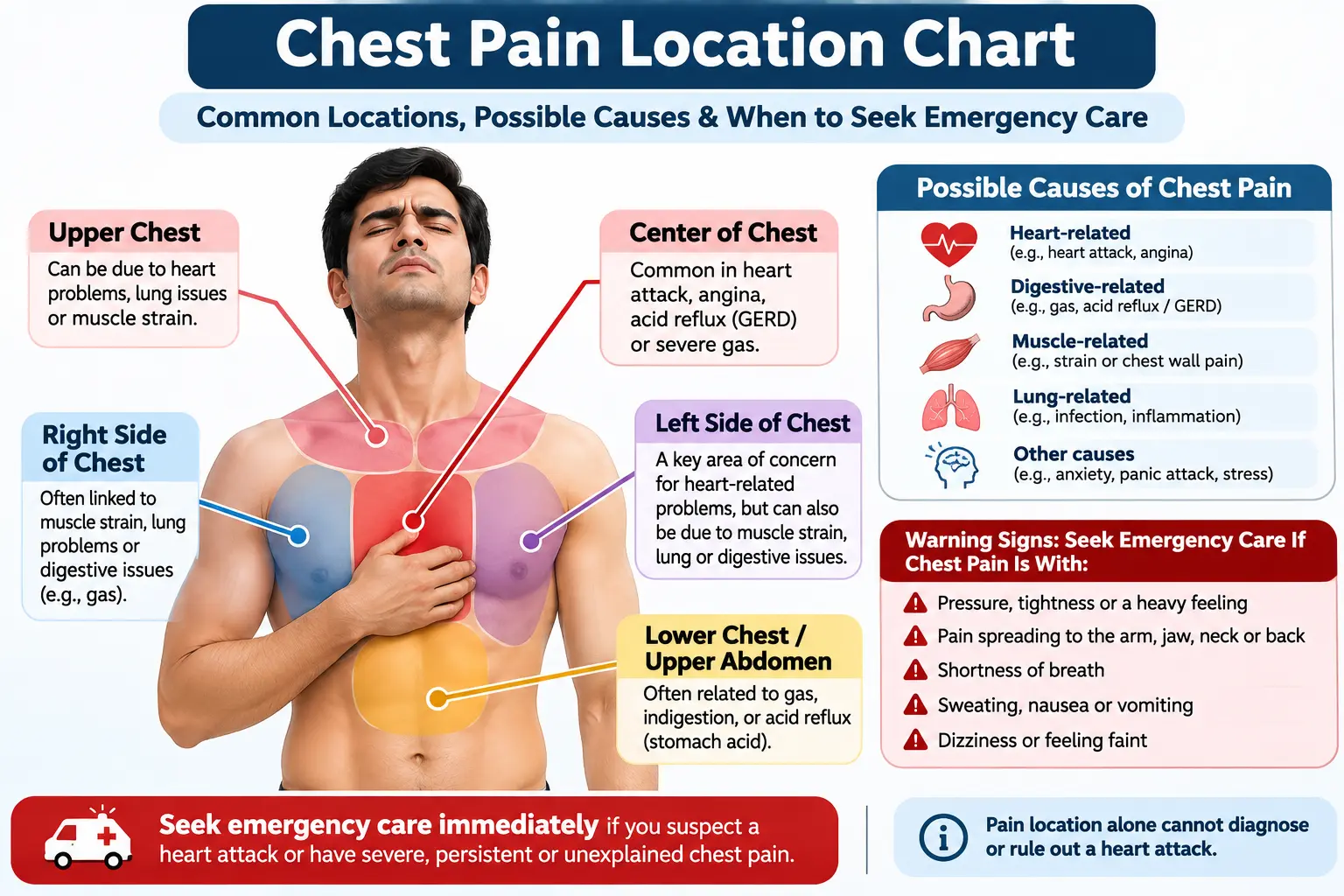
Heart attack pain is often felt in the center or left side of the chest, feels like pressure or squeezing, and may spread to the arm, jaw, or back. Gas-related discomfort can involve bloating, burning, or belching, while muscle pain often worsens with movement or touch.
But here's what matters most: chest pain location and symptoms alone cannot reliably distinguish a heart attack from gas or muscle pain.
Important note before you read further: This article is meant to help you understand what might be happening, not to talk you out of getting checked. If you're experiencing new, unexplained, persistent, or concerning chest discomfort, seek prompt medical evaluation. If you suspect a heart attack, call your local emergency number immediately (112 in India, 911 in the US, or 999 in the UK). No chest pain chart can replace a medical evaluation.
Why This Question Sends People Into a Panic
There's a very specific kind of dread that comes with chest discomfort — is this a heart attack, or did I just eat too fast?
That uncertainty is exactly why so many people either rush to the ER for what turns out to be gas or, worse, sit at home hoping it's "just acidity" when it isn't.
It's also understandable to worry about hospital bills, particularly if the pain ultimately turns out to be harmless. But seeking emergency care for possible heart attack symptoms is never something to feel embarrassed about.
This guide walks through the possible differences between cardiac, digestive, and musculoskeletal chest pain so you can better understand what you're experiencing — while being upfront that no article, including this one, can replace an actual diagnosis when the stakes are this high.
Chest Pain Location Chart: What Each Area Might Mean
Location alone never confirms a diagnosis, but it can provide a useful starting clue.
Here's a general breakdown of what pain in different areas might suggest:
| Location | Possible Causes | Typical Feeling |
|---|---|---|
| Center of chest | Heart-related conditions, acid reflux, or other causes | Pressure, squeezing, tightness, fullness, or burning |
| Left side of chest | Heart-related conditions, muscle strain, or rib inflammation | Pressure, aching, sharp, or localized discomfort |
| Right side of chest | Muscular, lung-related, digestive, or occasionally cardiac conditions | Sharp pain, tenderness, burning, or pressure |
| Upper abdomen/lower chest | Gas, acid reflux, heartburn, or sometimes heart-related conditions | Burning, bloating, fullness, or pressure |
| Between the shoulder blades | Muscular, cardiac, or other potentially serious conditions | Aching, pressure, or sharp discomfort |
| Spreading to arm, neck, or jaw | Possible cardiac warning sign, among other causes | Pressure, aching, heaviness, or radiating pain |
| Worsens with pressing or breathing | Muscle or rib inflammation; some lung-related conditions | Sharp, localized, or tender discomfort |
Keep in mind that this chest pain location chart is a general guide, not a diagnostic tool.
Cardiac pain doesn't always follow the textbook pattern. Women, older adults, and people with diabetes may experience less typical symptoms, sometimes with little or no obvious chest discomfort.
Important: Even if your symptoms appear to match gas or muscle pain on the chart, that does not rule out a heart attack or another medical emergency.
Left Side Chest Pain: What It Usually Means
Left side chest pain gets the most anxiety attached to it, understandably, since the heart is located mainly behind the breastbone and extends toward the left side.
But left-sided chest pain has a wide range of possible causes, and cardiac events are only one of them.
If it's cardiac in origin, the pain may feel like pressure, squeezing, tightness, or heaviness. It may also occur with shortness of breath, sweating, nausea, or discomfort spreading to the arms, jaw, neck, or back.
However, heart-related pain can sometimes feel sharp, burning, or unusual rather than like classic chest pressure.
If it's muscular — such as costochondritis, a strained chest muscle, or a pulled intercostal muscle between the ribs — the discomfort may stay in one specific spot and become more noticeable when you press on it, cough, or twist your torso.
Left-sided discomfort tied to digestion, such as trapped gas or reflux, may occur with bloating, burning, belching, or upper abdominal discomfort.
The important distinction: These patterns are clues, not proof. New or unexplained left-sided chest pain should not be assumed to be muscular or digestive without an appropriate medical assessment.
Heart Attack vs Gas Pain: The Real Tells
This comparison causes both unnecessary panic and dangerous delays in seeking care, so it's worth getting specific.
Gas-related discomfort often occurs after eating and may come with bloating, burping, abdominal fullness, or a rumbling stomach.
It can sometimes move around rather than stay fixed and may improve after passing gas, changing position, or taking an appropriate digestive remedy.
Heart attack pain, by contrast, is commonly described as pressure, tightness, squeezing, or a heavy weight sitting on the chest.
It may last more than a few minutes, temporarily ease and return, or occur alongside symptoms such as:
-
Shortness of breath
-
Breaking into a cold sweat
-
Nausea or vomiting
-
Lightheadedness or dizziness
-
Pain spreading to the jaw, neck, back, or one or both arms
-
Unusual tiredness or weakness
However, the symptoms of a heart attack and digestive discomfort can overlap significantly.
A heart attack can sometimes produce indigestion-like discomfort, burning, or pressure in the upper abdomen. Burping, antacid relief, or changes in body position cannot safely rule out a cardiac problem.
One genuinely important caveat: women may experience an upset stomach, nausea, unusual fatigue, or back discomfort alongside or instead of more typical chest symptoms.
If the discomfort is new, unexplained, persistent, or accompanied by potential cardiac warning signs, treat it as a possible emergency rather than testing home remedies.
What Muscle-Related Chest Pain Feels Like
One common musculoskeletal cause is costochondritis — inflammation where the rib cartilage meets the breastbone.
Costochondritis pain is often sharp, aching, or pressure-like, typically around the breastbone.
It may become noticeably worse when you press directly on the area, take a deep breath, cough, or twist your upper body.
Chest muscle strain can also develop after heavy lifting, intense exercise, repetitive movements, or prolonged coughing.
While muscle-related chest pain is often less dangerous than a heart attack, the symptoms can overlap with more serious conditions.
For example, pain that becomes worse when breathing may sometimes be associated with lung-related conditions, including serious problems such as a pulmonary embolism.
That's why new or unexplained chest pain should be medically assessed before you assume it's muscular.
Chest Pain Location Meaning: Putting It All Together
Understanding chest pain location meaning is most useful when you combine where the discomfort occurs with how the pain behaves and whether other symptoms are present.
Ask yourself:
-
Does the discomfort move around or stay fixed in one spot?
-
Does pressing on the area change how it feels?
-
Does it come with sweating, breathlessness, dizziness, or nausea?
-
Does it occur during physical activity or return repeatedly?
-
Does it persist or worsen rather than settle?
-
Is the discomfort spreading to your arm, jaw, neck, or back?
These questions can help you describe your symptoms more accurately to a healthcare professional.
However, they should not be used as a self-diagnosis checklist.
A change in pain with touch, movement, burping, or antacids cannot reliably exclude a heart attack.
Healthcare professionals may use your medical history, physical examination, electrocardiogram (ECG), and blood tests such as cardiac troponin to investigate possible cardiac causes.
If you're experiencing new, persistent, worsening, or otherwise concerning chest discomfort, seek prompt medical attention.
When to Go to Hospital for Chest Pain: Don't Wait on These Signs
This is the section that matters most.
Call emergency services immediately if you experience possible heart attack symptoms, including:
-
Pressure, squeezing, heaviness, or tightness in the chest lasting more than a few minutes, or discomfort that goes away and comes back
-
Pain or discomfort spreading to one or both arms, jaw, neck, back, or upper abdomen
-
Shortness of breath, with or without chest discomfort
-
Cold sweat, nausea, or vomiting with possible cardiac symptoms
-
Sudden lightheadedness, fainting, or severe weakness
-
New or unexplained chest discomfort, especially in someone with diabetes, known heart disease, or significant cardiovascular risk factors
Some heart attacks begin suddenly and intensely. Others develop gradually with mild or intermittent discomfort.
The American Heart Association explains that heart attack warning signs can include chest pressure, radiating discomfort, breathlessness, sweating, nausea, and lightheadedness.
Do not wait for every classic warning sign to appear.
What If It's Just Gas and I Waste Money on an Emergency Visit?
This is a genuine concern, especially when healthcare costs are high or insurance coverage is uncertain.
But there's an important difference between paying for an assessment that rules out something serious and delaying treatment for a heart attack.
A medical assessment can help determine whether the discomfort is cardiac, digestive, muscular, or related to another condition.
If a heart attack is occurring, early treatment can help limit damage to the heart.
When deciding when to go to hospital for chest pain, the safest approach is to seek emergency care if heart attack symptoms are possible or you are seriously concerned about the cause.
Don't let uncertainty about costs prevent you from getting potentially lifesaving medical attention.
What to Do While You Wait for Help
If you or someone nearby is showing possible heart attack signs:
-
Call emergency services immediately. Don't wait to see whether the symptoms disappear.
-
Stop physical activity and rest. Sit in a comfortable position while waiting for assistance.
-
Follow the emergency dispatcher's instructions. Aspirin may be recommended in some suspected heart attack situations, but it is not suitable for everyone. Follow medical or dispatcher guidance, especially if there is an allergy, bleeding risk, or another contraindication.
-
Avoid driving yourself to the hospital. Emergency transport is preferable when available because medical professionals can begin assessing and treating you during transport.
-
Stay on the line with emergency services. If someone becomes unresponsive and is not breathing normally, follow the dispatcher's CPR instructions.
Getting help quickly can reduce dangerous treatment delays.
You can discuss your symptoms, review test results, and understand recommended next steps.
You can also find doctors and explore consultation options on MedEasy for appropriate non-emergency follow-up care.
If your discomfort is new, ongoing, unexplained, or potentially heart-related, seek urgent in-person evaluation rather than relying on a video consultation.
Get Checked Without the Guesswork
Chest pain can be frightening, especially when the symptoms seem similar to both indigestion and something more serious.
The important thing is not to diagnose yourself from a chart.
A healthcare professional can consider your symptoms, risk factors, medical history, examination findings, and appropriate tests to determine what care you need.
For a better understanding of when remote healthcare is appropriate, read our previous guide on telehealth vs in-person visits.
If a serious cause has already been evaluated and routine follow-up is appropriate, explore MedEasy.ai to learn about available healthcare services and online consultation options.
Remember: If anything about your symptoms suggests a heart attack or another medical emergency, call emergency services immediately. Do not delay urgent care while trying to book an online consultation.
Resources & Further Reading
For reliable medical information about heart attack symptoms and emergency care, refer to:
Medical Disclaimer: This article provides general health information and is not a substitute for professional medical advice, diagnosis, or emergency treatment. Chest pain location and symptom patterns cannot independently determine whether a heart attack is occurring. If you experience possible emergency symptoms, seek immediate medical care.