


Seeing your scalp visible after applying oil is usually normal. Oil makes strands heavy, so they clump into thick sections and leave gaps between them. If your hair looks full again once it’s washed and dried, it’s not thinning.
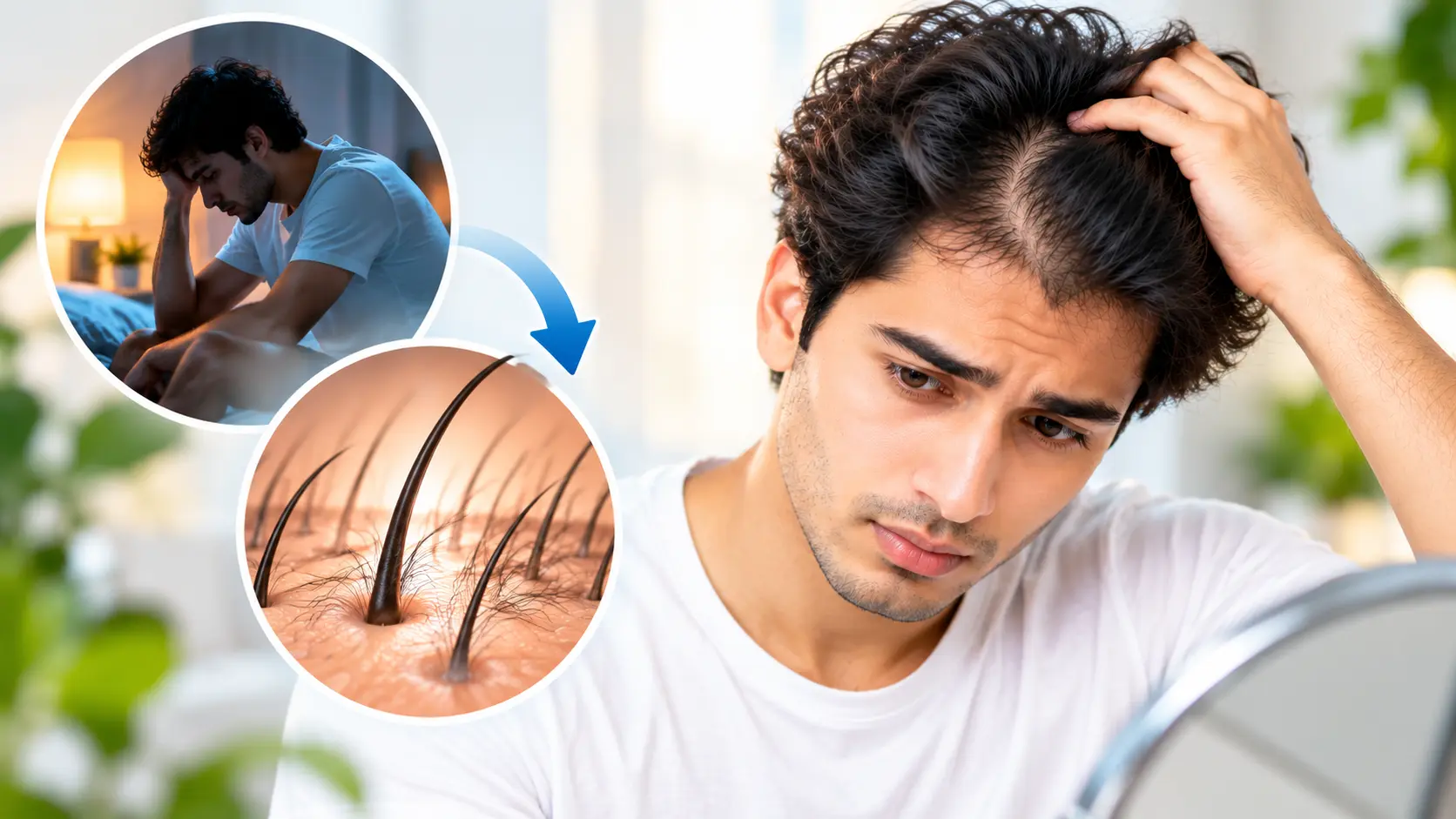
Still, that moment in the mirror is unsettling. You do your weekly champi, part your hair, and there’s more skin on show than you remember. In most cases you aren’t losing hair. This guide explains why it happens, how to check for real thinning at home, which warning signs need a doctor, and how to oil your hair so it doesn’t look flat and sparse.
Key takeaways
- Oil glues strands into clumps and flattens roots, so more scalp shows. No hair is lost.
- Judge your hair only when it’s clean and dry, never when it’s oily or wet.
- Normal shedding is about 50 to 100 hairs a day.
- See a doctor if gaps stay after washing, your parting widens over months, or you notice bald patches or heavy shedding for weeks.
Why Your Scalp Shows Through Once Hair Is Oiled
Quick answer: oil glues strands into clumps, flattens the roots and makes the scalp shine, so more skin shows without a single hair being lost.
Dry, clean hair has a little natural lift. Each strand stands slightly apart from the next, and together they form a soft layer that blocks the view of your scalp. Oil changes that in a few ways at once.
Strands stick together. Oil coats each hair and acts like a light glue. Neighbouring strands join up into thicker bundles, much like wet threads. Instead of thousands of evenly spread hairs, you now have fewer, chunkier sections with clear lines of skin between them. That is what hair clumping after oiling looks like, and it’s the biggest reason the scalp suddenly appears.
Hair loses its lift. Oil adds weight. Roots that normally rise a little off the head now lie flat, pressed close to the scalp. Less height means less coverage, especially around the crown and parting.
The scalp looks shinier. Oil on the skin reflects light. A glossy scalp catches the eye far more than a matte one, so the same amount of skin looks more noticeable under a bathroom light or in a selfie.
The strands look darker and thinner. Oiled hair appears more see-through and darker at the root, so the contrast between hair and skin becomes sharper. Light-coloured scalps under dark hair show this most.
Put those four effects together, and having your scalp visible after oiling is very likely for many people, especially those with fine or straight hair. None of these effects removes a single hair; they only change how your hair is arranged and how light falls on it.
Is It Normal for Scalp to Show When Hair Is Oily?
Yes, it’s extremely common and usually harmless. The same thing happens when hair is wet. Step out of the shower and look at your parting: you’ll likely see much more skin than you do once your hair has dried. Swimmers, people with fine hair and anyone who has tried a heavy oil like castor know this look well.
What matters is what happens next. If your hair bounces back to its usual fullness after you wash out the oil and let it dry, the visible scalp was a temporary styling effect. Nothing has been lost.
A few groups notice it more than others:
- People with fine hair. Each strand is thinner, so bundles leave bigger gaps.
- People with straight hair. Without waves or curls to add volume, oiled hair falls flat against the head.
- People with dark hair and fair skin. The colour contrast makes every gap stand out.
- People who use a lot of oil, or heavy oils. More oil means more weight and tighter clumps.
It’s also worth knowing that everyone sheds some hair every day. According to the American Academy of Dermatology’s guide to hair loss vs hair shedding, losing around 50 to 100 hairs a day is normal. You may notice those hairs more on oiling day, because massaging loosens strands that were already ready to fall. That’s shedding you would have seen anyway, not new hair loss caused by the oil.
Scalp Visible After Applying Oil vs Real Thinning: How to Tell
Here is the key difference. Clumping is temporary and disappears after a wash. Thinning stays, whatever state your hair is in. This side-by-side comparison will help you sort one from the other:
| What you notice | Oil clumping (usually normal) | Possible real thinning |
|---|---|---|
| When the scalp shows | Only after oiling or when hair is wet | Also on clean, dry, styled hair |
| After washing | Hair looks full again | Hair still looks sparse |
| Parting width | Looks wide when oily, normal when dry | Stays wide or widens over months |
| Ponytail size | No change | Feels noticeably thinner over time |
| Hair in the brush or drain | Usual amount | Clearly more than usual for weeks |
| Pattern | Gaps follow the clumps | Thinning at the crown, temples or along the parting |
| Scalp itself | Healthy apart from the oil | May be itchy, red, flaky or have bare patches |
If almost everything you notice falls in the middle column, you can relax. If several points sit in the right-hand column, it’s worth tracking more carefully and speaking to a doctor.
A Simple At-Home Check for Hair Thinning
You don’t need special equipment to get a clearer picture. Do this check on a day when your hair is clean and completely dry, with no oil or styling product in it.
- Choose the same spot and light every time. Stand near a window during the day, or under the same bathroom light. Changing light can make your scalp look very different from one photo to the next.
- Photograph your parting. Part your hair where you normally do and take a clear photo from directly above. Take another of your crown, using a second mirror or asking someone to help.
- Check your temples and hairline. Pull hair back gently and photograph the front hairline from both sides.
- Measure your ponytail. If your hair is long enough, gather it into a ponytail and wrap a soft tape measure or a piece of string around it. Note the measurement.
- Watch your shedding for a week. Notice roughly how much hair you see in your comb, pillow and shower drain. You don’t need to count every strand. Just note whether it feels like your usual amount or clearly more.
- Repeat after four to six weeks. Hair changes slowly, so one set of photos means little. Compare the new photos with the old ones, side by side, in the same light.
If the photos look the same and your ponytail measurement hasn’t changed, oil clumping was very likely the whole story. If your parting is widening, your crown is showing more, or your ponytail is shrinking, book a consultation. Bringing your photos along helps the doctor see the change over time.
Why Greasy Roots Make Hair Look Thinner
Even on non-oiling days, an oily scalp can make hair look flatter and thinner than it really is. Your scalp produces sebum, a natural oil, and some people make more than others. Hormones, heat, humidity and genes all play a part. When sebum builds up, roots go limp and the same clumping effect happens on a smaller scale.
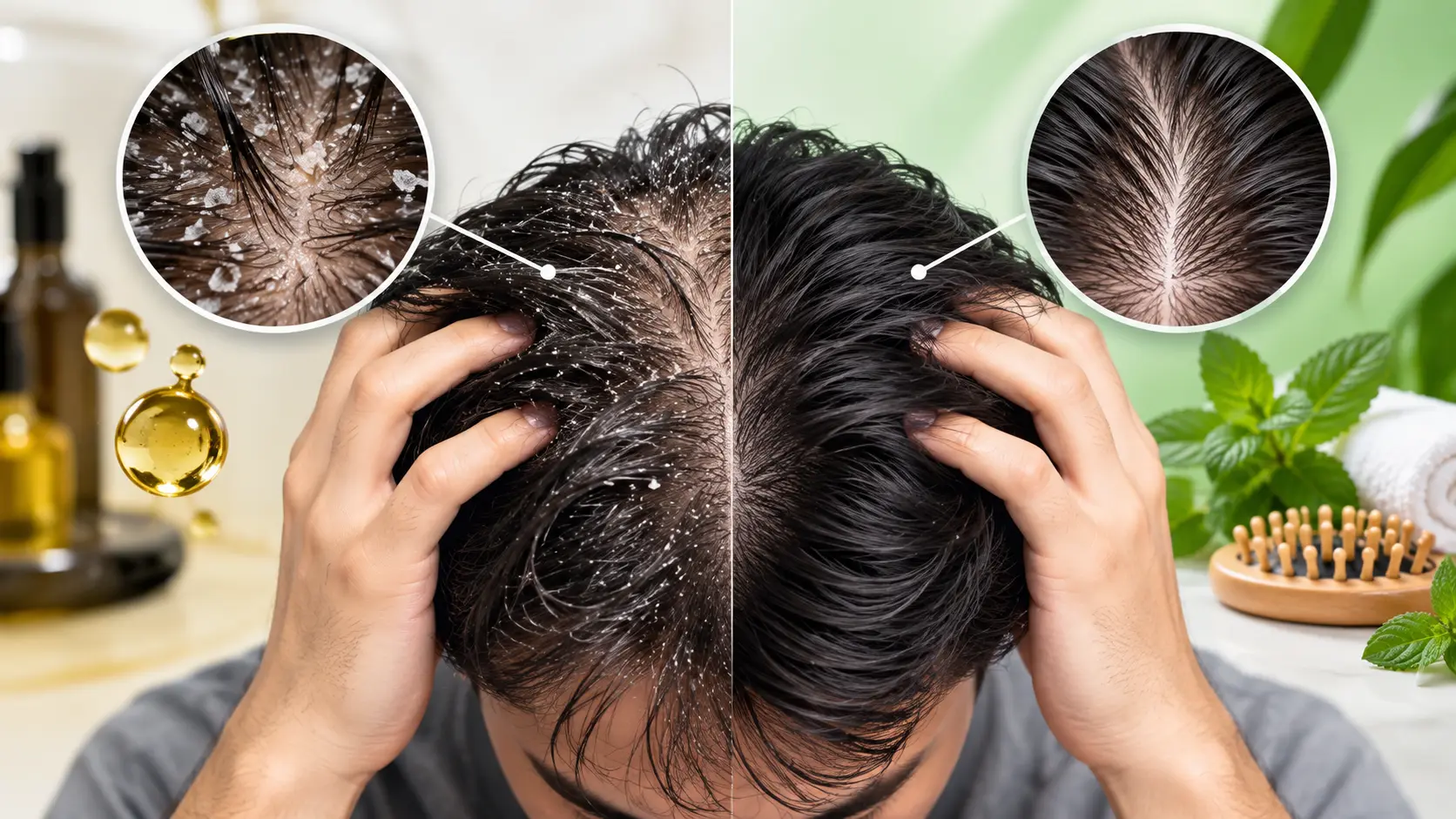
People often link oily scalp and hair thinning as if one causes the other, but the picture is more nuanced. Extra oil on its own doesn’t make hair fall out. However, an oily scalp can sometimes go hand in hand with a condition called seborrheic dermatitis, which causes greasy yellowish flakes, redness and itching. Scratching an irritated scalp a lot can damage hair, and the condition needs proper treatment, usually with medicated shampoos. It’s also true that some hormonal conditions linked to hair thinning, such as polycystic ovary syndrome (PCOS), can raise oil production too. In those cases, the oil and the thinning share a cause; the oil is not the culprit.
So if your scalp is greasy, flaky and itchy, treat that as a scalp issue worth showing a doctor. If it’s just oily and your hair looks fine after washing, it’s most likely a cosmetic nuisance rather than a hair-loss problem. For more on how flakes and an oily scalp can lead to shedding, read about hair fall caused by dandruff and an oily scalp.
When Visible Scalp Is a Real Warning Sign
Sometimes the worry is justified. Real hair thinning has many possible causes, and most of them are manageable when caught early. Some of the common ones include:
- Pattern hair loss. In men, this often starts at the temples or crown. In women, it typically shows as a gradually widening parting while the front hairline stays in place.
- Telogen effluvium. A sudden increase in shedding, usually two to three months after a stressful event such as high fever, surgery, childbirth, crash dieting or major emotional stress. It often settles once the trigger has passed, as Cleveland Clinic’s guide to telogen effluvium explains.
- Thyroid problems. Both an underactive and overactive thyroid can affect hair.
- Low iron or other nutritional gaps. Iron deficiency, low vitamin D and very low-protein diets have all been linked to hair changes. These everyday Indian foods that support hair growth can help fill common gaps.
- Tight hairstyles. Regularly pulling hair into tight buns, braids or ponytails can thin the hairline over time. This is called traction alopecia.
- Patchy hair loss. Round, smooth bald patches can point to alopecia areata, an autoimmune condition.
See a doctor or dermatologist if you notice any of these:
- Hair loss that continues for more than a couple of months
- Bald patches, broken hairs or a scalp that is red, scaly, painful or oozing
- Thinning along with tiredness, weight changes, feeling unusually cold, or irregular periods
- Sudden heavy shedding after illness, surgery or childbirth that isn’t easing
A doctor may examine your scalp and suggest simple blood tests, such as thyroid, iron and vitamin D. Treatment depends on the cause, so guessing at home rarely solves the problem. You can book hair loss tests for thyroid, iron and vitamin D from home to start finding the cause.
How to Oil Hair Without Greasy Scalp Problems
Oiling can be a relaxing, nourishing ritual, and there’s no need to give it up. A few small changes can stop it from leaving you with flat roots and a see-through parting for days.
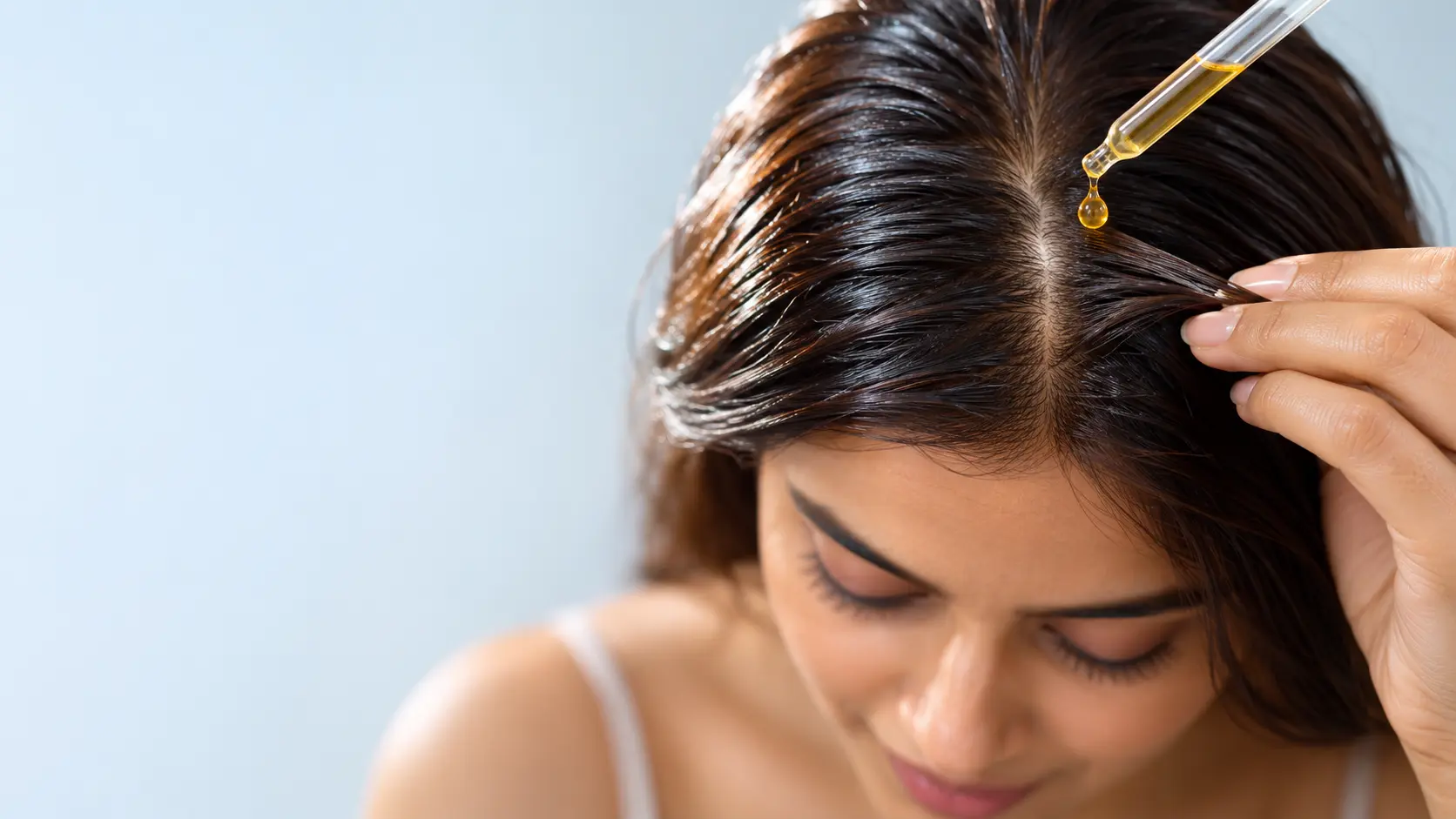
- Use less than you think. For shoulder-length hair, about one to two teaspoons is often enough for the whole head. Long, thick hair may need a little more. Warm the oil slightly between your palms or in a small bowl set in warm water.
- Focus on lengths and ends. These are the driest parts of your hair. If you enjoy a scalp massage, use only a small amount on your fingertips for the scalp itself.
- Massage gently. Use the pads of your fingers in slow circles for a few minutes. Rubbing hard or tugging can loosen hair and irritate the skin.
- Don’t leave it in for days. A few hours, or overnight at most, is plenty. Oil sitting on the scalp for long periods can attract dust and sweat and may aggravate dandruff in people prone to it.
- Shampoo properly. Oil doesn’t rinse out with water alone. Wet your hair, lather the scalp with shampoo, rinse, then shampoo a second time. The first wash breaks up the oil; the second actually cleans.
- Condition only the ends. Keep conditioner away from your roots on oiling day, since they’ve already had plenty of richness.
- Dry with a little lift. Blow-dry your roots upward or flip your head over while drying to bring back volume.
If your scalp tends to flake or itch, check with a doctor before oiling it regularly, since some scalp conditions may get worse with heavy oils.
Choosing a Lighter Oil for Fine Hair
Not all oils feel the same on the head. Heavier, thicker oils cling more and cause more clumping, while lighter ones spread thinly and wash out more easily. If your hair is fine or you’re worried about your scalp showing, start with the lighter end of this list.
| Oil | How it feels | Good for |
|---|---|---|
| Argan oil | Light, absorbs quickly | Fine hair, ends, frizz |
| Jojoba oil | Light and close in feel to natural sebum | Fine hair, light scalp massage |
| Sweet almond oil | Light to medium | Most hair types, softening |
| Coconut oil | Medium; solid in cool weather | Pre-wash treatment, medium to thick hair |
| Mustard oil | Heavy, strong smell | Thick hair, occasional use |
| Castor oil | Very thick and sticky | Best mixed with a lighter oil, if used at all |
There’s limited scientific evidence that any oil makes hair grow faster or stops genuine hair loss, so choose based on comfort and how your hair feels. Coconut oil does have some research behind it as a pre-wash treatment, with one study suggesting it may help reduce protein loss from hair during washing. Whatever you pick, patch-test it on a small area of skin first, especially if you have sensitive skin.
How Long Should Oil Stay In?
For most people, 30 minutes to two hours before washing works well. That’s enough time for the oil to soften the hair without weighing down your roots for the rest of the day. Overnight oiling is fine occasionally if you enjoy it, but use less oil, tie your hair loosely, and cover your pillow with an old towel.
Leaving oil in for two or three days is where trouble starts. Your scalp keeps producing its own sebum, sweat mixes in, and dust and pollution stick to the surface. This can leave the scalp itchy and flaky and makes your hair look thinner for longer. A cleaner routine is simple: oil, wait a few hours, wash, done.
The Bottom Line
Seeing your scalp visible after applying oil is one of the most common hair worries, and in most cases it’s nothing more than heavy, clumped strands catching the light. Judge your hair when it’s clean and dry, track it with photos rather than guesses, and keep your oiling light and short. If the gaps stay after washing, or you notice patches, heavy shedding or an unhappy scalp, that’s the time to get checked rather than worry in front of the mirror.
Get Your Hair and Scalp Checked with MedEasy
When you’re ready to look after your hair and scalp with expert support, MedEasy can help:
- Shop lightweight hair oils and clarifying shampoos at MedEasy’s online pharmacy, plus doctor-prescribed scalp treatments, delivered to your home.
- Talk to a doctor online about hair thinning or an itchy scalp, connected in under 60 seconds.
- Book thyroid, iron and vitamin D tests with home sample collection if your doctor recommends them, with no clinic visit needed.